Triarchy Naval Combat on the Wild Seas
Hull damage, rafts, boarding plunges, and salvage loops from Wild Seas playtest builds.
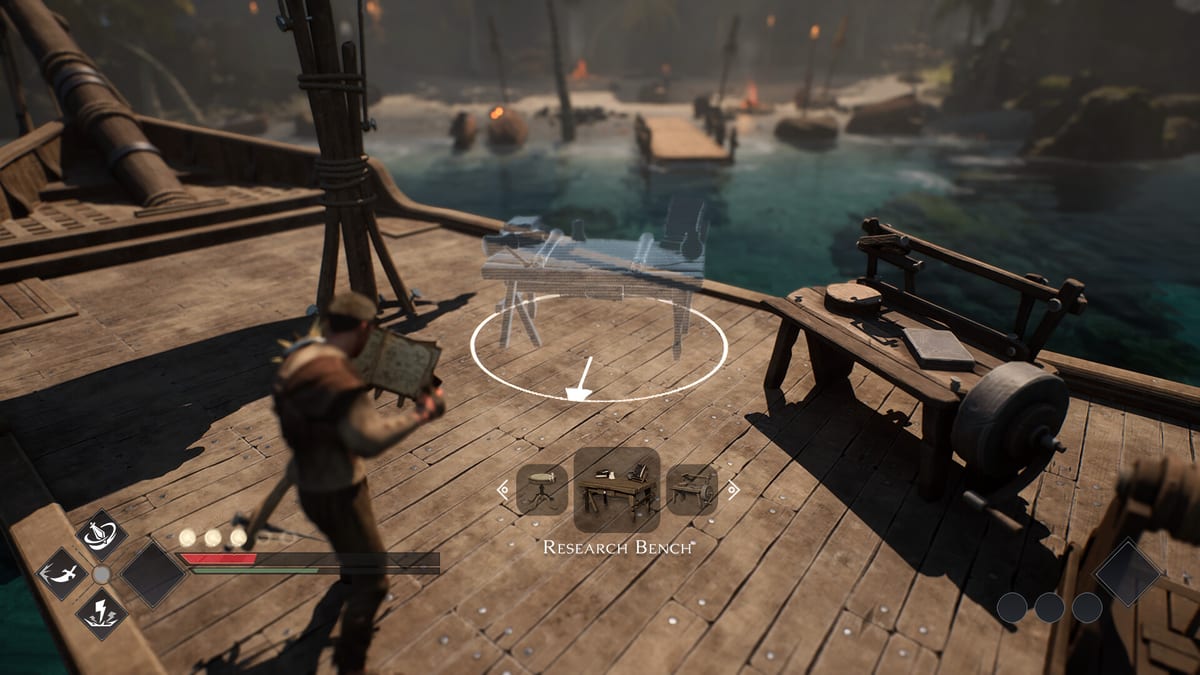
Naval combat arrived in Triarchy through Wild Seas playtest weekends—Digital Confectioners’ label for open-ocean threats beyond calm sailing demos. The game is still unreleased (planned 2026 on Steam), so damage numbers, raft AI, and repair economies will change. Official co-op remains one to three players; experimental branches that temporarily allowed six or eight players were test-only stress runs, not the baseline balance this guide assumes.
Wild Seas notes from Steam community updates describe a sharper loop: ship hull damage from impacts, listing and partial sink states when damage stacks, a shipboard Repair Station for patch-ups, dynamic waves and weather tied to Calypsis, Gribble migrations on rafts, optional ramming, boarding plunge attacks, and flotsam salvage when materials run dry. This page translates those systems into crew-ready strategy and links sailing, upgrades, and combat basics for when fights spill onto decks.
From peaceful sailing to Wild Seas risk
Before Wild Seas, players could treat the ship as invulnerable transport. Patch messaging changed that: stop sailing straight into island shores—impacts now chip hull integrity. That single rule redefines sailing education: the helm is a combat role, not a minigame.
Naval combat sits between exploration and boss prep. You might ram a Gribble raft for materials, board with a plunge attack, then sail home to craft at the workbench before a boss pull. Ignoring sea threats leaves you under-repaired and under-stocked.
Hull damage, listing, and partial sink
Ship health is now a shared resource in tested builds:
- Impact damage — collisions with islands, rocks, or hostile vessels reduce hull integrity.
- Listing — heavy damage tilts the ship, changing movement and readability.
- Partial sink — enough damage without repair can leave the vessel crippled mid-ocean.
Mitigation layers stack:
- Helm discipline — slow approaches, reef sails near coasts (see Sailing guide).
- Hull upgrades — durability branches insurance long routes.
- Repair Station — onboard patch for minor damage between fights.
- Flotsam salvage — emergency mats when repairs stall.
Document how much damage a single shoreline scrape causes each playtest—UI feedback helps developers tune readability.
Repair Station workflow
Wild Seas added a Repair Station aboard ship for minor patch-ups. It is not a skip button for reckless ramming—it buys time while crew gather mats or finish a fight.
Suggested co-op flow after a naval scrape:
| Step | Action |
|---|---|
| 1 | Call damage state aloud (listing yes/no) |
| 2 | Assign one player to Repair Station if safe |
| 3 | Others watch for raft spawns or boarding threats |
| 4 | Dock at full health before expensive workbench sessions |
Pair repairs with stash checks on shared progress saves so rare mats are not wasted on preventable damage.
Dynamic waves, weather, and Calypsis
Test notes highlight ocean waves dynamically responding to weather and warnings about Calypsis awakening the sea. Visibility drops in heavy weather, which amplifies collision risk and makes Gribble raft spotting harder.
Captains should:
- Reduce speed when seas rise—even if sail upgrades tempt you to push.
- Pre-mark safe harbors on the Map Table before entering storm bands.
- Rotate helm if fatigue causes steering mistakes; see co-op roles in sailing docs.
Weather is both atmosphere and mechanic until proven otherwise—treat storms as naval encounter timers.
Gribble migrations and rafts
Gribbles—hostile creatures established on multiple islands in public test copy—migrate on rafts built from seafaring junk. Steam patch notes joke about “a day of raft building, a pinch of seafaring skill, and a boat-load of luck,” but the gameplay warning is serious: some flotsam clusters hide Gribble migrations.
Approach floating debris cautiously:
- Scout from distance before closing—ramming may be optional, not mandatory every time.
- Expect hostility when Gribbles recognize your ship.
- Climb Gribble ladders near towers when island assaults return in the same patches.
Island Gribble camps tie to land combat basics—poise breaks, stamina, and assists still apply once you leave the wheel.
Ramming rafts and boarding plunge attacks
Wild Seas leaned into aggressive options:
- Ramming — your hull is bigger; intentional collisions can shatter enemy rafts (patch text even quipped ramming is “REQUIRED” for some goals).
- Boarding plunge attacks — leap from your ship onto a raft for melee openings.
Aggression costs hull integrity. Ram when:
- Repair materials are stocked or flotsam is nearby.
- Crew is ready to follow the plunge and not leave helm unattended too long.
- The raft is confirmed hostile—not neutral flotsam with salvage only.
After boarding, sync with dual-wield loadouts and consumable belts if your build uses them.
Flotsam salvage for repairs
When Gribbles win or storms cripple you, flotsam floats in the ocean as salvage. Patch notes suggest scavenging debris when repair materials run dry—a backup loop, not primary farming.
Salvage etiquette in co-op:
- Call flotsam pings so all players see the cluster.
- Pick up communally on host stash rules—deposit before drop-out.
- Return to Repair Station once mats arrive.
- Re-evaluate route if damage exceeded expectations.
Track which flotsam types grant repair mats versus generic junk during each playtest.
Linking naval combat to ship progression
Naval loops feed the broader mobile base:
- Upgrades — hull durability reduces listing frequency; sails help escape after raids.
- Workbench — craft repair kits, weapons for boarding, and boss consumables.
- Sailing — helm binds (remember gamepad B to exit helm) and weather reads.
- Playtest hub — Wild Seas events are time-limited; prep checklists matter.
Challenge Mode boss farming assumes you arrive at islands with a seaworthy ship, not after a partial sink comedy run.
Co-op roles during naval encounters
Standard 1–3 player crews benefit from explicit roles:
- Helm — collision avoidance, ram timing, post-hit recovery heading
- Boarder — plunge attacks, raft clears, Gribble tower climbs
- Support — Repair Station, flotsam collection, callouts
Swap roles between encounters so everyone learns Repair Station placement and ram angles. Experimental high-player tests muddy role clarity—use them for feedback, not canonical strats.
Playtest volatility and feedback
Wild Seas is active development. Patch bullets already renamed systems between weekends—flotsam spawn rates, ram damage tradeoffs, and Gribble raft density will move. When testing:
- Note hull % after one intentional ram versus one accidental island kiss.
- Record whether listing blocks Repair Station use.
- Flag readability issues when Calypsis weather peaks.
Constructive reports on co-op friction, repair clarity, and helm UX directly shape the 2026 launch.
Summary
Triarchy naval combat makes the ship a vulnerable weapon. Respect hull damage and listing, use the Repair Station before crises compound, read Calypsis weather, choose when to ram or board, and salvage flotsam when mats run low. Master sailing first, invest in upgrades, stock the workbench, and treat every Wild Seas weekend as a rehearsal for launch-day voyages.
Frequently Asked Questions
Quick answers drawn from Steam playtests and official announcements.
Can the ship sink permanently?
Wild Seas tests describe **partial sink** and heavy listing from damage, not confirmed permadeath of your mobile base. Expect recovery loops via repairs and salvage until launch clarifies.
What does the Repair Station fix?
Playtest notes position it for **minor hull patch-ups** after impacts. Major damage may still require materials, workbench crafts, or flotsam salvage.
Are Gribble rafts always hostile?
Gribbles migrate on rafts and may not welcome your ship. Some **flotsam** is harmless salvage—scout before ramming every floating object.
Does ramming cost hull integrity?
Yes—ramming trades enemy raft damage for **your own hull stress**. Repair or upgrade hulls before spamming rams in co-op sessions.
Is naval combat required for progression?
You can often route around threats with careful sailing, but Wild Seas content rewards engaging rafts and salvage for repair mats and island access.