Triarchy Boss Fight Overview
Patterns, phases, arena hazards, and rewards across Triarchy's isle hunts.
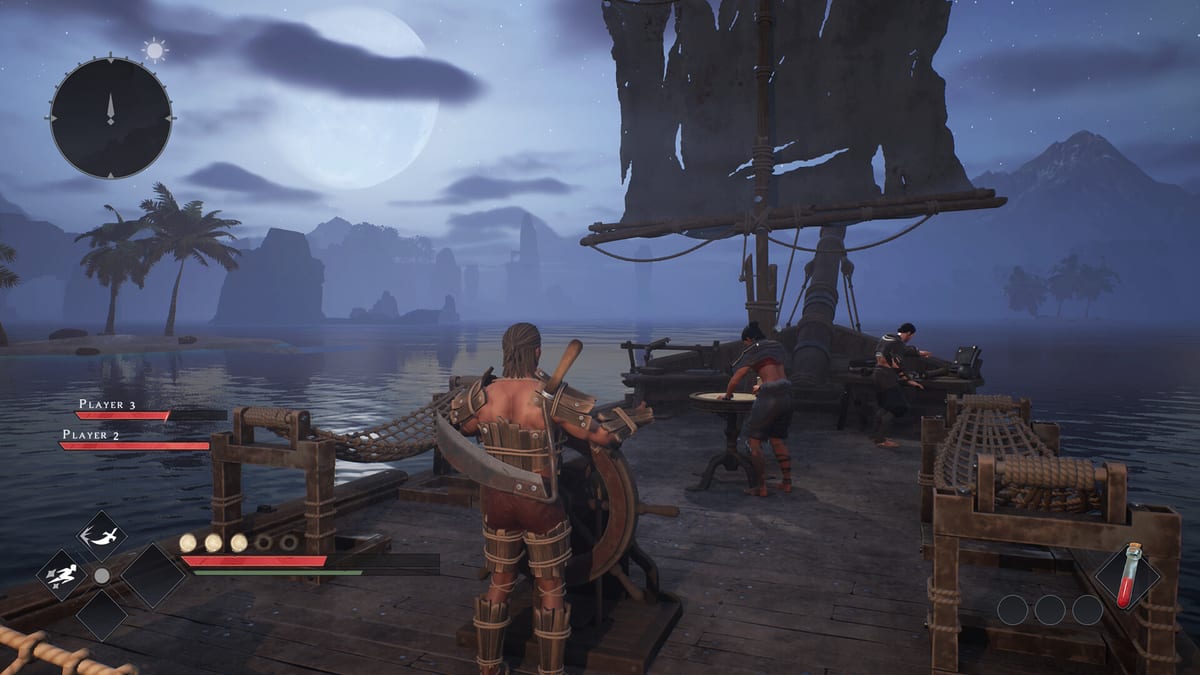
Triarchy boss fights are built to feel like set-piece exams after open sailing—not stat sponges you click down in a field. Digital Confectioners promises distinct attack patterns, multi-phase battles, and arena hazards that test timing, positioning, and teamwork for 1–3 players. Winning yields unique upgrade materials and boss-exclusive gear feeding the ship workbench and build identity. The game is not released (Steam 2026), so specific boss rosters will grow during playtests, but the design grammar is already visible in official copy and preview articles.
Use this overview to understand how hunts fit the wider loop—Map Table discovery, co-op scaling, shared progress, and optional Challenge Modes—before you pull your first arena lever.
Anatomy of a standard boss hunt
Most hunts likely follow a repeatable structure:
Discovery and approach
You find a boss through exploration, quest hooks, or Map Table reveals. Approach routes matter: some isles may feature vertical terrain, dock requirements, or trash packs scaled to party size. Scout under no tether rules but regroup before crossing the arena threshold.
Pre-pull preparation
Official difficulty assumes crafting and talent choices. On the ship, run the prep tips checklist: consumables, resist gear, assist alignment via assist planner, and co-op voice plan. Drop-in guests should join before pull when learning.
Phase one: pattern learning
Early phases teach core telegraphs—swing arcs, projectile lanes, summon timing. Solo players use this window to practice combat basics like stamina management and dodge iframes. Trios assign a phase caller who narrates upcoming hazards.
Phase transitions
Multi-phase design means new mechanics—not just faster attacks. Expect:
- Arena layout changes (flooded floors, collapsing platforms)
- Add waves requiring split attention
- Enrage timers pushing damage checks
Transitions are wipe points for unprepared crews who burned consumables too early.
Phase two and beyond
Later phases stack hazards: overlapping AoE, faster combo strings, or immunity rotations. Co-op shines here—one player handles adds while others maintain boss damage. Solo relies on build sustain and assist tuning.
Victory and rewards
Defeating the boss grants unique upgrade materials and boss-exclusive gear per marketing. Return to the ship immediately: deposit mats, craft upgrades, mark Challenge triggers on the Map Table if discovered.
Arena hazards and positioning
Arena hazards are environmental threats tied to the fight space—lightning strips, rising water, falling debris, edge knockback. They force positioning even when raw DPS is high.
General rules:
- Identify safe anchors during phase one; reuse them until layout shifts.
- Move as a unit in co-op—spread for spread mechanics, stack for stack mechanics.
- Do not face-tank hazards that bypass armor; many are avoidable with movement taught in combat basics.
Hazards often escalate in Challenge rematches—save mental maps from story clears.
Attack patterns and telegraphs
Distinct patterns mean bosses should be readable:
| Telegraph type | Player response |
|---|---|
| Long wind-up slam | Dodge sideways, punish recovery |
| Channeled beam | Rotate behind or break line-of-sight |
| Summon add wave | Assign cleave or focus fire |
| Debuff application | Cleanse or swap player role |
Learn patterns before upgrading gear—mechanics solve fights cheaper than wasted legendaries.
Solo versus co-op tuning
Official materials state fights are balanced for 1–3 players. Enemy scaling adjusts baseline stats; mechanics stay shared.
Solo — fewer adds, lower HP, but you cover all roles. Assists help accessibility.
Duo — flexible role split; communication replaces raw stats.
Trio — highest scaling; mechanics execute faster—callouts mandatory.
Mixed-assist parties are valid: your damage taken slider does not change ally scaling.
Rewards and crafting integration
Boss rewards anchor progression:
- Unique materials — gate ship upgrades or legendary recipes
- Exclusive gear — defines builds before generic island loot catches up
- Challenge extras — better drops from Challenge Modes rematches
Spend materials on the shared progress host save after crew agreement.
From story clear to Challenge rematch
Story clears teach mechanics; Challenges test mastery. Marketing mentions secret triggers to activate harder difficulties—environmental puzzles, items, or time gates not visible on first kill.
Do not rush Challenges without:
- Stable phase callouts
- Crafted counters from workbench
- Fixed trio roster if scaling peaks
Failure, recovery, and learning loops
Wipes are expected. After failure:
- Identify mechanic failure versus gear failure.
- Re-watch patterns if VOD or replay exists in test builds.
- Craft targeted fixes—one resist potion beats ten generic ones.
- Adjust builds or assists before re-pull.
- Sail only when necessary—retry nearby if arena allows quick re-entry.
Repeat attempts benefit from sail upgrades shortening return trips.
Playtest documentation for future boss pages
When individual bosses appear in tests, record:
- Name, island, recommended level or gear tier
- Phase count and hazard list
- Unique drops and Challenge trigger location
- Solo vs trio timing benchmarks
Those notes become future JSON pages—this overview stays the mechanical foundation.
Summary
Triarchy bosses combine readable patterns, escalating phases, and arena hazards with rewards that feed your mobile base. Learn fights on the ship, respect co-op scaling, and graduate to Challenge Modes when mechanics—not stats—limit you.
Frequently Asked Questions
Quick answers drawn from Steam playtests and official announcements.
How many phases do Triarchy bosses typically have?
Official copy promises **multi-phase** fights without fixed numbers. Expect at least one major transition with new mechanics per major boss.
Do arena hazards deal true damage?
Hazard tuning is unknown pre-release. Assume many are lethal if ignored—positioning is core, per marketing emphasis on timing and teamwork.
Can I summon co-op friends mid-boss?
Possible technically via drop-in, but discouraged while learning—scaling and phase timing get chaotic. See drop-in guide.
Are boss fights timed?
Some phases may include soft enrages common to ARPG bosses. Watch for escalating hazard frequency during long attempts.